The homepage guide

Natural building in warm climates, honestly explained

Rammed earth, adobe, cork, hempcrete, straw and lime: what each one is good at, what it costs you in time and money, and how to get it past the planners, whether you are building in Spain, Mexico, Italy or Portugal.

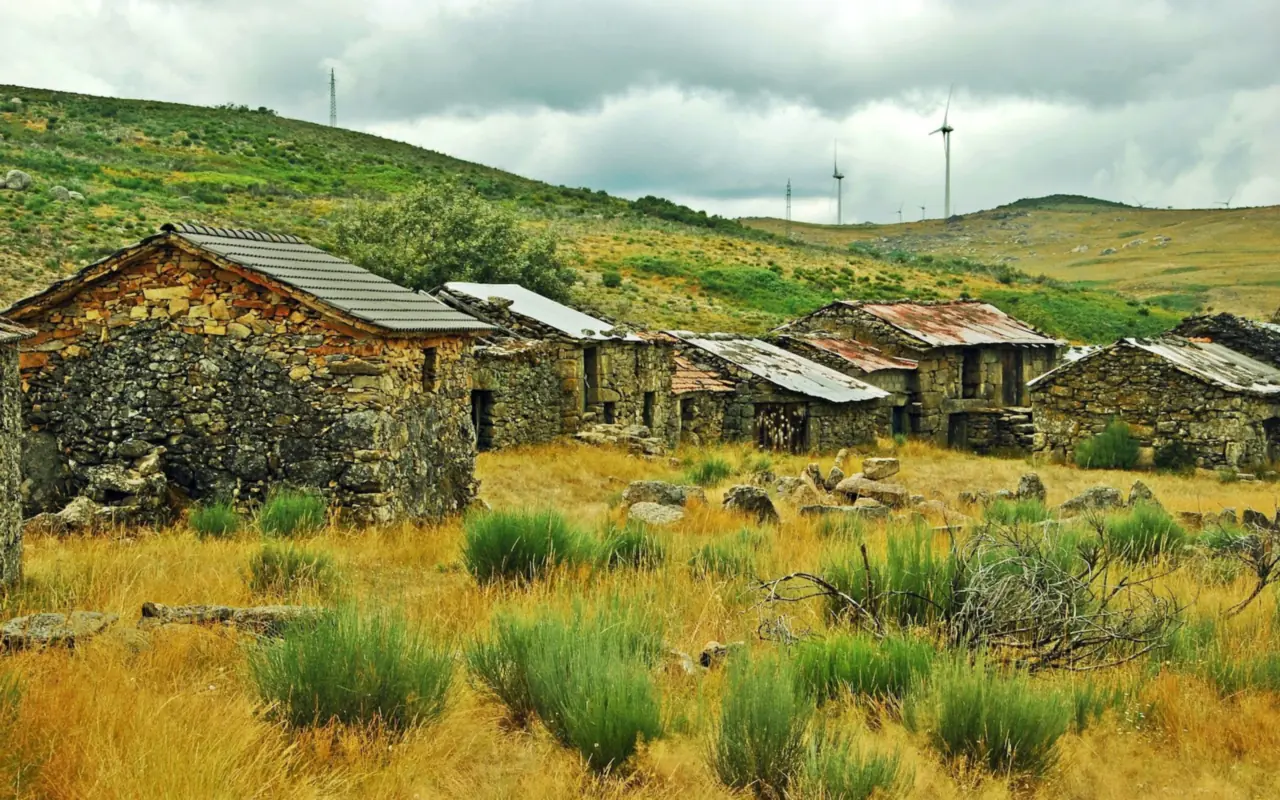
A cluster of abandoned dry-stone houses with tin and slate roofs on a grassy hillside in rural Portugal
An abandoned hillside village in Portugal. Photograph: Veronika Wölfelová / Unsplash

01 Principles

Why build with natural materials?

The best natural house is not the one with the most exotic walls. It is the one that suits its climate, its plot and its owner's budget.

Most warm, dry regions have built with earth, stone, timber and lime for as long as they have built anything. The whitewashed walls of Andalusia and the Alentejo, the adobe houses of Mexico and the stone farmhouses of Italy and Greece were low-impact long before the phrase existed. They used what was nearby and could be repaired with the same materials.

Modern natural building takes that logic and adds what the old houses lacked: proper insulation, airtightness where it matters, and a design worked out on paper before the first load of soil arrives. These materials tend to have low embodied carbon, handle humidity well and are often local. The difficulties are real too: fewer experienced builders, more paperwork for anything non-standard, and walls that punish shortcuts.

This site is for people planning a build or renovation somewhere with hot summers and mild winters. The principles travel; the rules and trades change by country, so we use real places as examples.

02 Climate

Start with the climate, not the material

Illustration of a low house with a thick layered earth wall, a deep roof overhang and a high summer sun and low winter sun summer winter
High summer sun stays off the glass; low winter sun reaches in and warms the mass of the wall.

Passive solar design lets the building do most of the heating and cooling through orientation, shape, glazing and mass, before any machine is switched on. In warm climates, the harder problem is usually summer.

A few principles hold almost everywhere warm and dry, from the Mediterranean to the Mexican highlands:

  • Face the main glazing towards the equator (south in the northern hemisphere) and size it with care. Too much glass overheats even in spring.
  • Shade it with fixed overhangs calculated for your latitude, so the high summer sun is blocked and the low winter sun still reaches in.
  • Keep west-facing glass small. Late afternoon sun is low, hot and hard to shade.
  • Put thermal mass inside the insulation. Heavy floors and walls smooth out big swings between day and night.
  • Plan for night ventilation, with openings on opposite sides of the house so cool air can flush out the day's heat.

Nearer the equator, in Costa Rica or southern Mexico, winter heating barely matters, so deep roofs, shaded verandas and cross-ventilation do the work. Get these basics right first; the wall material is then a detail.

03 Materials

The materials, one by one

Walls and mass

Rammed earth and adobe

Rammed earth, called taipa in Portugal and tapial in Spain, is damp subsoil compacted in layers inside formwork. Adobe is similar soil formed into sun-dried bricks, the traditional wall across much of Mexico. Both can last centuries if kept dry at the top and bottom.

Their strength is thermal mass, which evens out hot days and cool nights. Their weakness is poor insulation, so external walls often need an insulating layer. Soil must be tested, and unreinforced earth fares badly in earthquakes, a real risk in Mexico, Italy, Greece, Costa Rica and parts of Iberia, so it needs careful engineering.

Insulation

Cork

Cork comes from the cork oak forests of the western Mediterranean: Portugal harvests about half the world's supply and Spain nearly a third. Expanded cork board is made by heating cork granules so they bind with their own natural resin, and it insulates about as well as common synthetic boards. It resists rot and ships worldwide.

Insulating walls

Hempcrete

A mix of chopped hemp stalk and a lime-based binder, cast around a frame or laid as blocks. It is not load-bearing. It balances moderate insulation with some thermal mass and buffers humidity well. Cast walls need weeks of good drying weather, and supply varies by country.

Insulating walls

Straw bale

Cheap wherever cereals are grown, renewable, and a very good insulator when the bales are dense, dry and laid the right way. Builders say a straw house needs good boots and a good hat: a raised plinth and wide eaves. The main risk is water, during construction or through poor detailing.

Structure

Timber frame

Often the backbone of a natural house, carrying the roof while hempcrete, straw or cork do the insulating. It is fast and light. In warm climates, protect it from termites and wood-boring insects with good detailing, durable species and ventilation, not chemicals alone.

Finishes and repair

Lime renders and plasters

Lime is the glue of natural building. Air lime hardens slowly by absorbing carbon dioxide from the air; natural hydraulic lime sets faster and copes better with damp. Both stay far more breathable than cement, which suits earth, straw, hemp and old stone. Lime renders take skill, need protecting from hot sun and drying winds while they cure, and are traditionally finished with limewash.

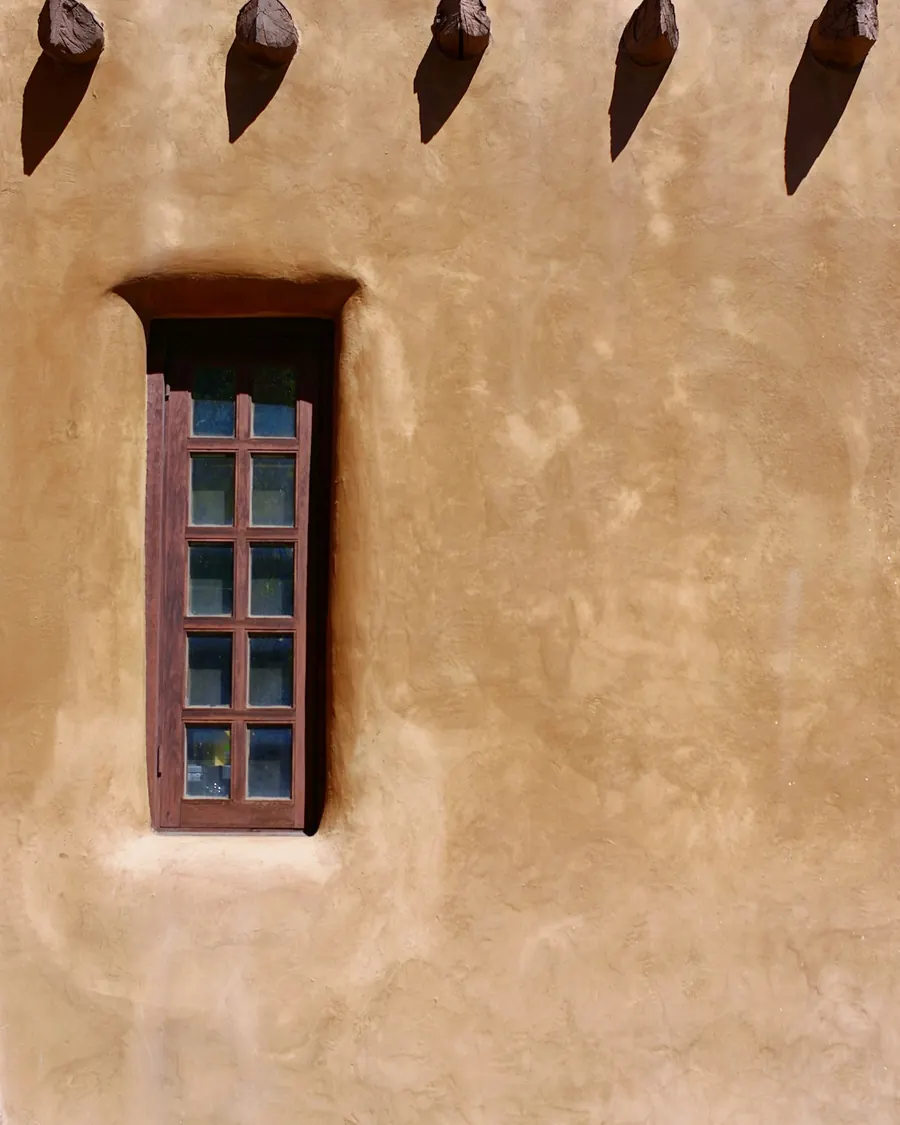
A smooth, hand-finished earth-toned render wall with a narrow deep-set timber window and projecting roof beams
A hand-finished render on a thick earthen wall, Santa Fe, New Mexico. Photograph: Nate Bell / Unsplash

04 Data

Materials compared

Thermal conductivity (lambda, in W/mK) measures how easily heat passes through a material; lower means better insulation. These are typical published ranges, not design values: the real figure depends on density, moisture and installation, so your engineer should use certified data.

Natural building materials at a glance
Material Main job Insulation (approx. lambda) Thermal mass Load-bearing? Main trade-off
Rammed earthWalls, massPoor, roughly 0.5 to 1.2Very highYes, with engineeringNeeds added insulation; skilled, slow work; seismic design
Expanded corkInsulationVery good, about 0.036 to 0.040LowNoCosts more than synthetic boards
HempcreteInsulating infillModerate, about 0.06 to 0.12ModerateNo, needs a frameLong drying time; thick walls
Straw baleInsulating wallsVery good, about 0.045 to 0.08LowSometimes, usually framedMust stay dry at every stage
Timber frameStructureDepends on the infillLowYesInsects and fire detailing
Lime renderFinish, protectionNot an insulatorLowNoSlow curing; needs a skilled hand
Old stoneExisting wallsPoorVery highYesDamp if sealed with cement; hard to insulate

Straw bale values vary with fibre direction: heat crossing the stalks gives better figures than heat running along them.

05 Retrofit

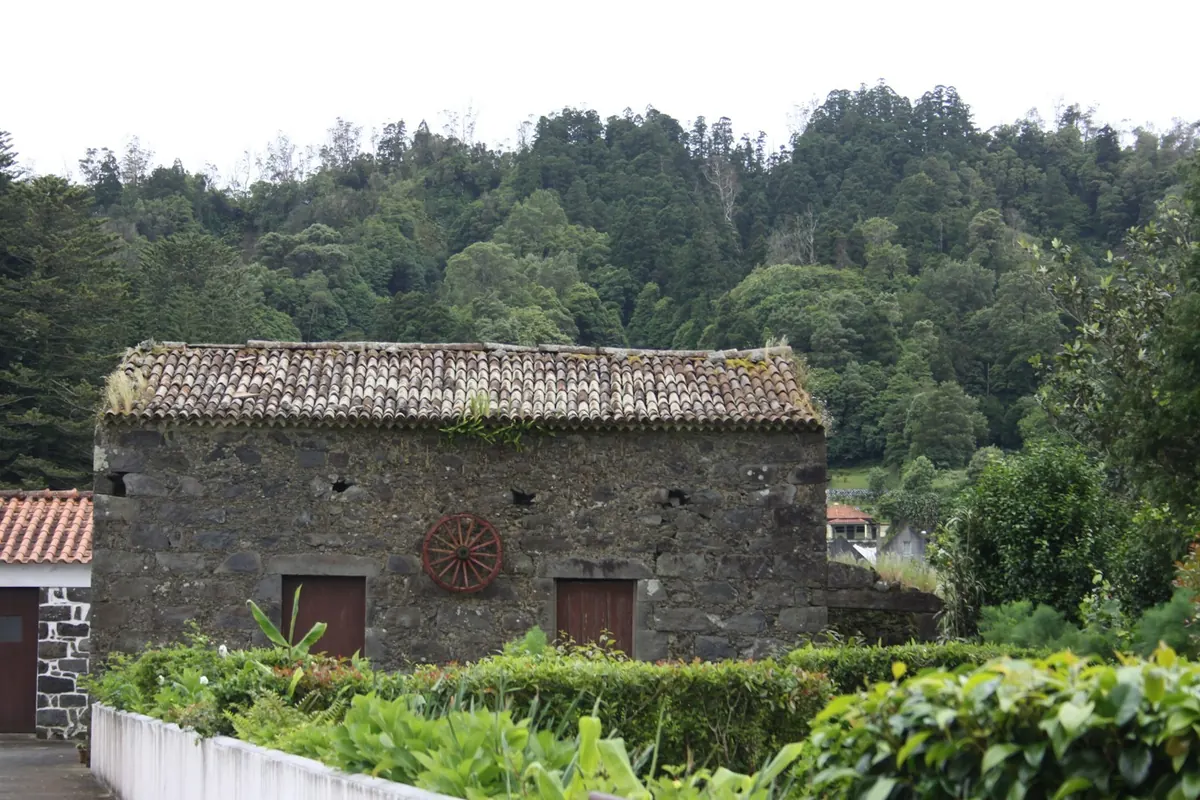
A single-storey house of dark volcanic stone with a clay tile roof and two timber doors, set in a green garden
A stone house with a clay tile roof, Sete Cidades, Azores, Portugal. Photograph: Dalila Moreira / Unsplash

Retrofitting an old stone or earth house

Abandoned stone houses fill hill villages across inland Portugal, Spain, Italy and Greece, and old adobe homes are common in Mexican towns. Restoring one is often the lowest-impact way to get a home, since the walls already exist, and it is where most expensive mistakes happen.

Traditional stone and earth walls manage moisture by letting it evaporate. Cement pointing, cement render and plastic paint trap that water inside, and an earth wall sealed in cement can quietly crumble at its base. The first job in many renovations is simply taking the cement off and letting the wall dry.

A sensible order of works

  • Get a structural survey. Check roof timbers, lintels and any bulging walls.
  • In earthquake zones, ask how the walls will be tied together at roof level.
  • Fix the roof and rainwater first.
  • Repoint and render with lime, never cement.
  • Insulate with breathable materials such as cork board, hemp-lime or insulating lime renders.
  • Put most of the insulation effort into the roof and floor, where it is easiest and pays back most.

06 Permits

Building permits: how the process works

Natural materials are allowed in principle almost everywhere, but the building must meet the same safety and energy rules as any other, and site-made earth or straw walls usually need an engineer to justify them. Permits are mostly municipal, so details change from town to town. Treat this as orientation, not legal advice.

The questions to ask first

Can a house go on this land at all? Rural, agricultural and protected land is restricted almost everywhere, and a cheap plot is often cheap for that reason. Get the answer in writing before you buy.

Who signs, and which route? Most places need a registered architect or engineer to sign the project. Many also offer lighter notification routes for smaller works, which are faster but put more responsibility on you.

How it looks in four countries

Portugal. Homes on rustic land are tightly restricted by the municipal plan (PDM) and the national reserves (RAN and REN). Decree-Law 10/2024, the Simplex Urbanístico, replaced many licences with prior notification (comunicação prévia) or exemptions.

Spain. New builds need a licencia de obra mayor from the ayuntamiento, with an architect's project showing compliance with the building code (CTE). Rules on rural land (suelo rústico) vary by region.

Italy. New houses and major renovations generally need a permesso di costruire from the comune under DPR 380/2001, with regional rules on top and seismic design in much of the country.

Mexico. Licences come from the municipality and requirements vary widely. Foreigners usually hold homes near the coast or borders through a bank trust (fideicomiso), and communal ejido land needs specialist legal checks.

07 Costs

What it really costs

Price-per-square-metre figures go stale fast and vary hugely between countries and crews, so here is where the money actually goes.

Labour, not materials

Soil, straw and even hemp can be cheap. Ramming, casting, plastering and careful detailing are slow, skilled work, and that is usually the bigger bill, so natural methods compete best where skilled labour costs less.

Design and paperwork

Non-standard walls may need extra engineering, testing or calculation, especially where few natural buildings have been approved. Budget for professional fees early.

Time and weather

Earth, lime and hempcrete need dry weather and drying time. Plan around the rainy season: winter around the Mediterranean, summer across much of Mexico. Rushing shows up later as cracks and damp.

08 Questions

Frequently asked questions

Is rammed earth a good insulator?

No. Rammed earth and adobe store heat very well but conduct it far more readily than insulation. Where winters are cold or energy rules are strict, add an insulating layer such as cork board, or use earth for interior walls, where its thermal mass does the most good.

Can I build a house on agricultural or rural land?

Often not, or only under strict conditions. Most countries keep farming, forestry and conservation land apart from land zoned for homes, from rustic land in Portugal to agricultural zones in Italy. Exceptions are local decisions, so ask the planning office in writing before you buy.

Why should old stone and earth houses be repaired with lime instead of cement?

Old stone and earth walls were built to let moisture move in and out. Cement is harder and far less breathable, so it traps water in the wall, causing damp, salt damage and crumbling. Lime works with the wall rather than against it.

Do I need an architect or engineer to get a building permit?

For a new house, almost always. Spain requires a registered architect's project, Italy a qualified professional's signature on a permesso di costruire, and many Mexican municipalities want plans signed by a licensed professional. Small repairs may need less, so check first.

What matters more in a warm climate, heating or cooling?

Usually cooling, and summer overheating is the most underestimated risk. Shade the glazing, keep west-facing glass small, use thermal mass and ventilate at night. Where winters are cool, let the low winter sun in too.
09 About

About Earthbound Build

From the blog

All posts